
At Muirhead, leather sustainability is shaped by decisions made across the full lifecycle of the material, from sourcing through to manufacturing and long-term performance. Looking at carbon in isolation, without this context, risks overlooking what defines truly environmentally responsible leather in practice.
A structured approach to reducing impact
Meaningful reductions in environmental impact begin with the raw material sourcing, including the origin and traceability of our hides, and extend through how leather is made, from energy use and water consumption to process control and waste reduction. Collectively, these factors shape the overall footprint of the material and define what constitutes environmentally responsible leather in practice.
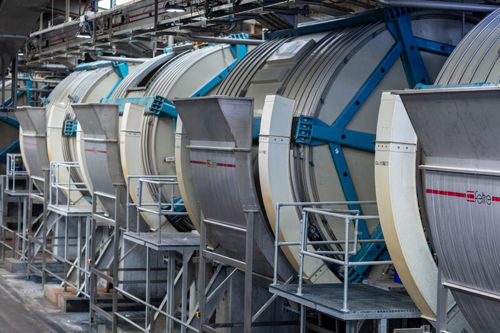
At Muirhead, this has been driven through long-term investment in manufacturing infrastructure and process innovation. The development of our Super Tannery marked a step change in operational efficiency, enabling greater control over resources and emissions.
This approach has contributed to our achievement of net zero for Scope 1 and 2 emissions. While this represents an important milestone, it’s not an endpoint but part of our broader commitment to continuous improvement.
Low Carbon Leather is therefore not the result of a single initiative, but of consistent, incremental progress embedded across production.
Measuring impact: the role of Life Cycle Assessment
Establishing a credible view of carbon impact depends on how it is measured. At Muirhead, this is undertaken using an independent ISO-accredited Life Cycle Analysis (LCA), providing a consistent and transparent basis for comparison.
This approach considers emissions across the value chain, rather than focusing on a single stage of production. It also reflects the complexity of leather manufacturing, where upstream processes, material conversion and long-term use all contribute to overall impact.
LCA measures the impact of production. At Muirhead, this results in a figure of 8kg CO₂e/m², representing the lowest publicly available figure for leather of its kind. This reflects the cumulative effect of long-term investment in energy, process efficiency and vertical integration.
Looking beyond manufacturing: a lifecycle perspective
While manufacturing plays a critical role, it is only part of the equation. A credible approach to sustainable leather must also consider how materials perform over time.
Durability is central to this. Materials that maintain their integrity in demanding environments reduce the need for replacement, lowering their overall environmental impact. In aviation and mass transit applications, where performance requirements are high, longevity becomes a defining factor in leather sustainability.
Other lifecycle considerations also contribute to environmentally responsible leather, including:
- Efficient maintenance requirements during service
- The potential for refurbishment or extended use
These factors ensure that sustainable leather is defined not only by how it is produced, but by the value it delivers over time.
A considered approach to leather sustainability
A narrow focus on carbon at a single stage of production does not reflect the multi-stage nature of leather manufacturing. Nor does it account for the balance required between environmental impact, durability and performance.
For this reason, a robust approach to leather sustainability is grounded in transparency, consistent methodology and long-term thinking. It reflects how materials are developed and used in practice, rather than relying on simplified claims.
Low Carbon Leather is most meaningful when considered as part of a wider, evidence-led approach to leather sustainability. It cannot be separated from how a material is made, how it performs, and how long it lasts.
At Muirhead, the focus remains on continuous improvement. Achieving net zero for Scope 1 and 2 emissions marks an important step, supported by a Life Cycle Analysis framework that provides a broader view of impact.
Environmentally Responsible leather is not defined by a single measure, but by the consistency of decisions made across the entire lifecycle, forming a more complete approach to leather sustainability.
Latest Insights

How material innovation is shaping the future of fire-safe, sustainable, non-toxic furniture

How BioPRO foam helps push sustainability targets in rail

Why airlines are moving towards integrated seat foam and cover solutions
Please contact our expert team for more information:

